

Semih
Travel editor at Reisedrop · 2026-09-11
Try this: ask any chatbot what a hotel in Mallorca costs in July. You'll get an answer in seconds – nicely worded, with a price range that sounds perfectly plausible. "Around 80 to 120 euros per night," it says. And then comes the sentence that gives it all away: "Prices and availability may vary – please check on a booking site." Wait. If I have to check it myself anyway – what was that answer worth?
Where does a chatbot get its prices? From memory.
A language model like ChatGPT has no booking system behind it. It was trained on huge amounts of text – websites, articles, forums – and by the time you ask, those texts are months to years old. When you ask for a hotel price, the chatbot doesn't query a database. It generates a number that statistically fits your question. That's not looking something up, that's estimating – brilliantly worded, but still a guess. That's why the answers sound so confident and are still non-binding.
"But the chatbot can search the web, right?"
True, many can nowadays. But even with web search, the chatbot finds prices from random websites – often cached, without your exact travel dates, without your number of guests, without the room category you want. It sees a snapshot, not a bookable rate. That's the difference between "I saw 95 euros somewhere" and "This room costs 95 euros for you, on your dates, right now – and you can have it."
Hotel prices change faster than you scroll
Hotel and flight prices are dynamic: they depend on occupancy, season, remaining allotments and demand, and they sometimes change several times a day. Last night's price can already be wrong this morning. That's exactly why any answer without a live query at the moment of your search is, strictly speaking, outdated – even if it happens to be right once in a while. For popular destinations in high season, two days can easily mean a 20 or 30 percent difference.
The biggest catch: you can't book anything in a chat
Even if the estimated price happens to be right – in a chatbot, the journey ends with the answer. You have to leave, search yourself, set filters, and usually find a different price than promised. The supposed shortcut becomes a detour: first ask, then do everything yourself anyway.
How Globee does it differently
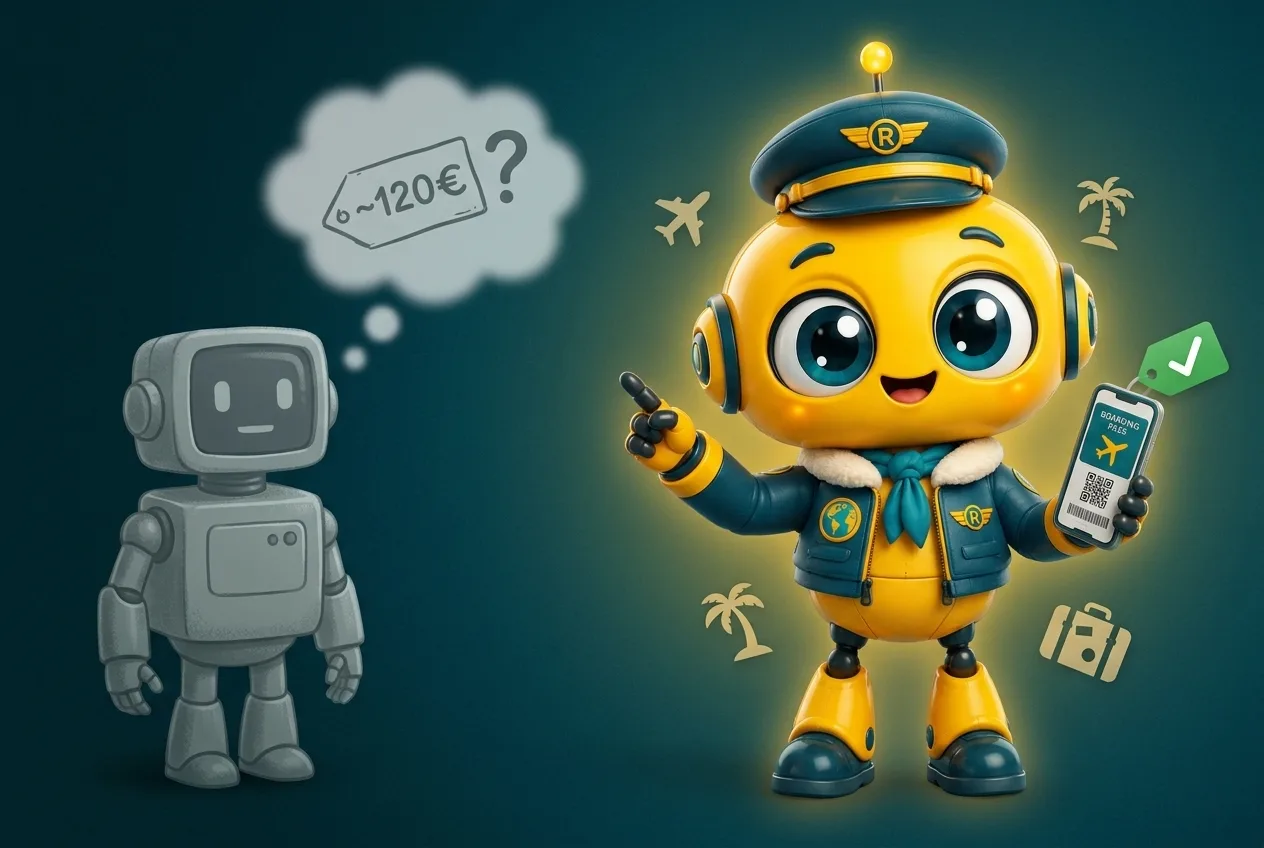
Globee, the copilot on Reisedrop, answers the same question differently – not because it chats more cleverly, but because it works differently. The moment you ask, Globee queries our partners' real booking systems: hotels and flights, with your dates, your number of travellers, your preferences. What you see is the available live rate – with photos, real availability and a book button. No "approximately", no "please check yourself". Two clicks, one price, zero stress.
And if the price drops later? That's what the price alert is for
Because prices do fluctuate, you can set a price alert on any hotel on Reisedrop – with or without an account, an email address is enough. If the price drops or falls below your target price, you automatically get an email. That way, price dynamics work for you instead of against you.
Frequently asked questions
Why doesn't a chatbot like ChatGPT know current hotel prices?
Because it doesn't query a booking system – it generates a plausible number from old training data. That's estimating, not looking up.
Can a chatbot with web search find real hotel prices?
Only snapshots without your dates, number of guests and room category – never a bookable rate with guaranteed availability.
How fast do hotel and flight prices change?
Sometimes several times a day. For popular destinations in high season, two days can mean a 20 to 30 percent difference.
What is the difference between Globee and an ordinary chatbot?
Globee queries the real booking systems the moment you ask and delivers a bookable live rate. A chatbot knows yesterday's prices and guesses.